How to Choose a Dining Table That Actually Lasts
A dining table tends to be one of the most-used and longest-kept pieces of furniture in a home — which makes it worth getting right the first time. Here’s what actually matters when choosing one, beyond how it looks in a photo.
Start With Size, Not Style
Before anything else, measure your space. A common mistake is buying a table sized for the room in a showroom, not the room at home. As a general guideline, leave at least 36 inches of clearance around the table on all sides so chairs can be pulled out comfortably and people can walk past while others are seated. Measure your space first, then shop within that footprint.
Solid Wood vs. Veneer
This is one of the biggest decisions in dining table shopping, and it comes down to budget and longevity:
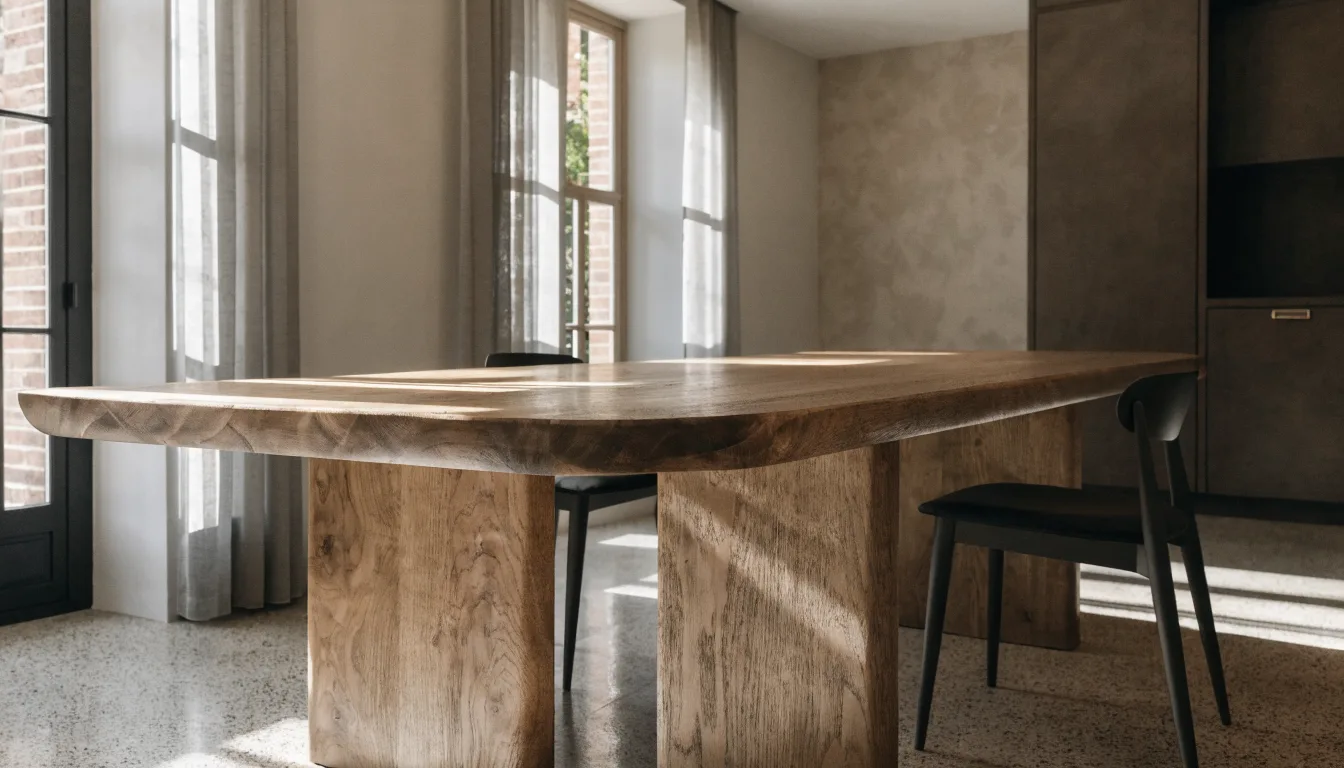
- Solid wood is more durable, can typically be refinished or repaired if it’s scratched or dented over the years, and tends to develop character with age. It’s usually the higher upfront cost.
- Veneer (a thin layer of real wood over a composite core) can look identical to solid wood at a lower price point, but it can’t be sanded down or repaired the same way if it’s damaged.
If you plan to keep a table for a decade or more, solid wood is usually the better long-term value, even at a higher starting price.
Shape Matters More Than People Expect
Rectangular tables are the most space-efficient for most rooms and seat the most people per square foot. Round and oval tables encourage conversation and work well in more square-shaped rooms, and they’re often easier to walk around in tighter spaces. If your dining area is narrow, a rectangular table with rounded corners is usually the safest choice for both function and flow.
Think About How You Actually Use It
A table that looks stunning but only comfortably seats four isn’t the right choice for a household that regularly hosts eight. Be honest about your real usage — everyday family meals, occasional big dinners, or both — and choose a size and extension option (if available) that matches, rather than the table that photographs best.
Finish and Maintenance
A matte or hand-rubbed finish tends to hide daily wear better than a high-gloss finish, which shows fingerprints, water rings, and scratches more easily. If the table will see daily use, especially with kids, a slightly more forgiving finish will keep it looking good for longer with less maintenance.
Browse our current dining tables and seating, check our materials guide for details on wood types and finishes, or contact us if you’d like help choosing the right size for your room.