5 Ways to Style Open Shelving Like a Pro
Open shelving is one of those design choices that looks effortless in photos and surprisingly hard to pull off at home. The difference between “curated” and “cluttered” comes down to a few consistent rules. Here’s how to get it right.
1. Group in Odd Numbers
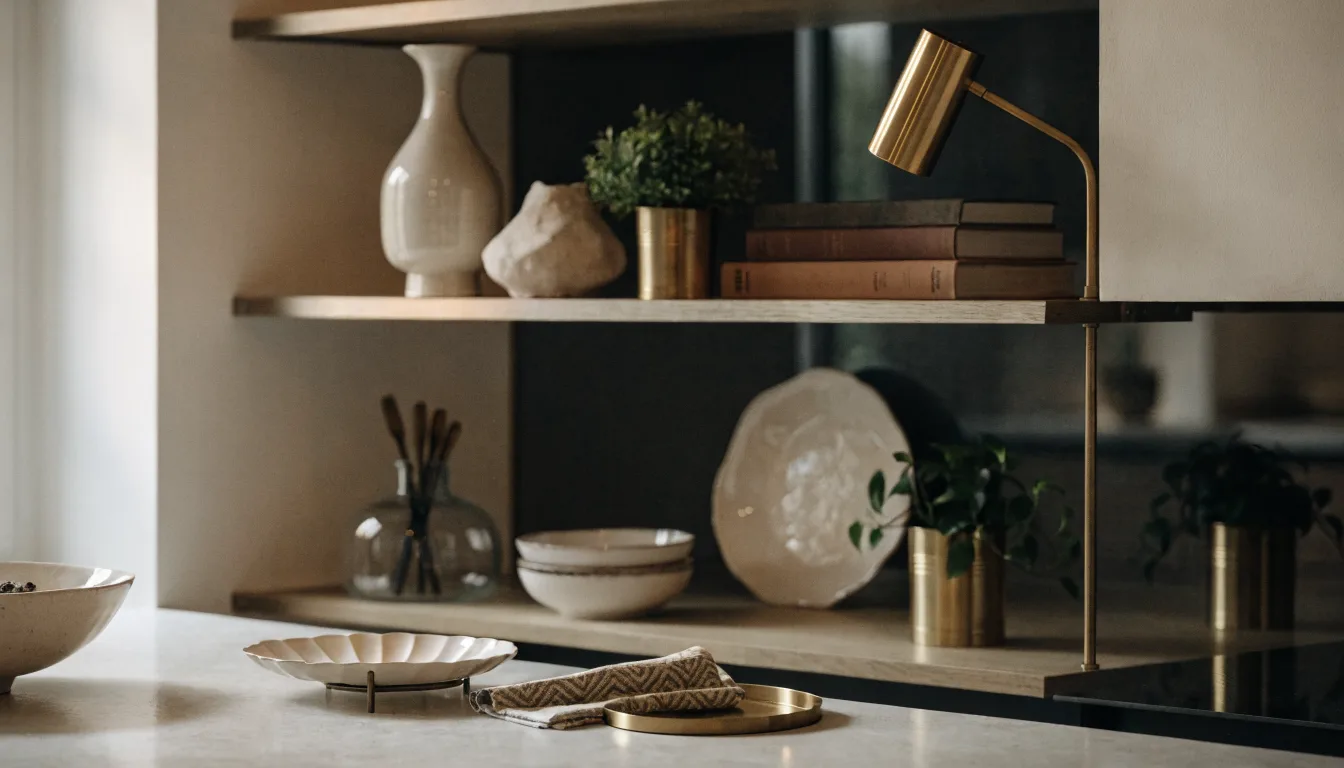
Items grouped in threes tend to look more intentional than pairs or even larger groups. When arranging objects on a shelf — a stack of bowls, a vase, a small plant — try grouping them in threes rather than spreading everything out evenly. Odd numbers naturally create visual interest instead of a too-symmetrical, static look.
2. Vary the Height
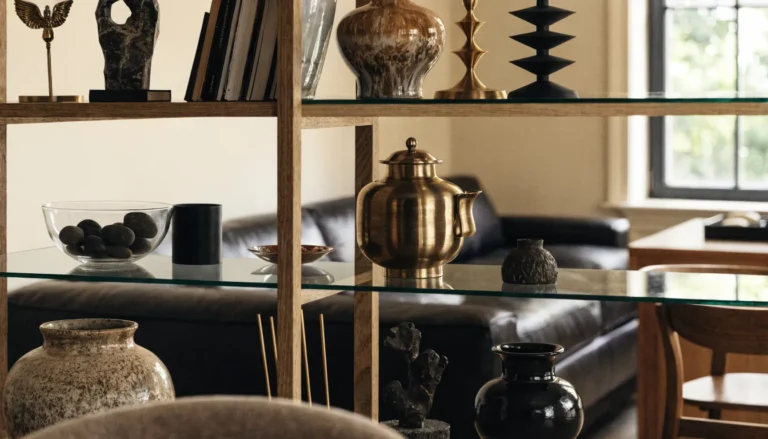
A shelf full of items that are all the same height reads as flat, no matter how nice each individual piece is. Mix taller items (a vase, a stack of books) with shorter ones (a small bowl, a candle) to create a more dynamic silhouette across the shelf.
3. Leave Negative Space
The most common mistake in open shelving is filling every inch. Empty space isn’t wasted space — it’s what lets the eye rest and keeps the shelf from feeling overwhelming. As a rough guide, aim to leave at least a third of each shelf visually “empty,” even if that means storing less-attractive everyday items elsewhere.
4. Mix Function With Display
Open shelving works best when it’s not purely decorative. Mixing everyday-use items (a stack of your nicest bowls, glasses you actually use) with a few purely decorative pieces (a vase, a small piece of art) keeps the shelf feeling lived-in rather than staged. Purely decorative shelves can start to feel like a display case instead of part of a real kitchen or living space.
5. Repeat a Color or Material
Shelves with too many competing colors and materials look chaotic fast. Choose one or two materials or tones — say, warm wood and brass, or all-white ceramics — and let most of the items on the shelf pull from that limited palette. This single choice does more to make a shelf look “designed” than almost anything else on this list.
Putting It Together
Start by removing everything from the shelf, then reintroduce items in small groups, checking height variation and negative space as you go. It’s much easier to edit a mostly-empty shelf up than to edit an overfull one down.
Shop our decor accessories and shelving pieces, see our materials page for pairing ideas, or contact us for styling suggestions.